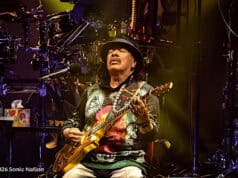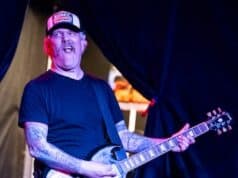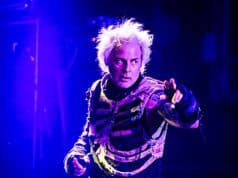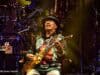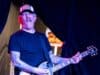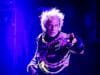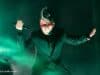

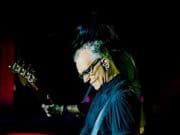
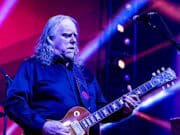

Last Saturday night, in dusty, hot Tulsa, and at the legendary Cain’s Ballroom, a collective of talented musicians and artists assembled to recreate the songs of Dylan’s infamous performance at the Newport Jazz Festival on Sunday, July 25, 1965, and his “scandalous” move from playing folk music with acoustic instruments to going “electric.”
While playing amplified music hardly seems revolutionary in 2025, in 1965, it was considered sacrilege for a folk artist like Bob Dylan to go to the dark side and play loud rock. In fact, in 1965, it was shocking and seen as musical and cultural treason. Dylan didn’t care then, and he still doesn’t. Don’t box Bob in.
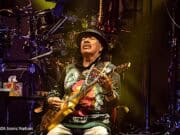
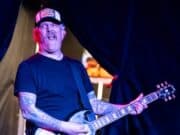
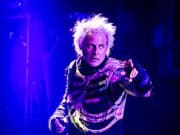
Dylan fans flocked to Cain’s for two shows–one with reserved seating, and another with general admission and standing room only. The concerts, sponsored and promoted by the Bob Dylan Center (a must-visit destination), a museum dedicated to the music, songwriting, poetry, and life of Dylan, promoted the shows entitled “Going Electric: The Million Dollar Bashers.” The band, led by musical director and Sonic Youth guitarist Lee Ranaldo, includes Dean Wareham (ex-Galaxie 500/Luna) and vocalist Brita Phillips from Luna, former Sonic Youth drummer Steve Shelly, Wilco keyboardist Mikael Jorgensen, bassist Ethan Miller of Howlin’ Rain, and Wilco’s innovative guitarist, Nels Cline.
The band was also joined by X’s bassist and vocalist, John Doe; folk vocalist, Sunny War; alt darling, the enigmatic Robyn Hitchcock; poet and vocalist, Joy Harjo; and the lovely and talented Australian singer-songwriter, Emma Swift. The band and guests reproduced songs from the legendary 1965 performance and more. Their set included faithful renditions of Dylan classics, including “It’s All Over Now, Baby Blue,” the Byrds’ smash hit cover of “Mr. Tambourine Man,” “Like a Rolling Stone,” and “It Takes a Lot to Laugh, It Takes a Train to Cry.” In between songs, Renaldo told the stories of the songs and the time in history, and other artists, including Robyn Hitchcock and John Doe, described the magic of Dylan and what it means to them as musicians and artists.
While the audience for the first show leaned towards the mature and included fans who had been there from Dylan’s beginnings, the second show included some younger music fans, including fans of Dylan, as well as fans of Sonic Youth, Robyn Hitchcock, Luna, and Wilco.
Both performances were stellar, magical, and a great testament to this pivotal chapter in the evolution of Dylan as an artist and cultural icon. The talented collective breathed new life, added textures, and delivered full-bodied ensemble recreations of classic Dylan tunes.
Dylan has always done whatever the hell he wants, and in the process, changed the face of modern music, songwriting, and American culture. At this point, at 84, Dylan doesn’t care much about mass success, chart success, acceptance, awards, or trends. Come to think of it, he never really did. He’s always done things his way, and he is a living legend who continues to tour, create, and influence legions of new songwriters, bands, and artists.
Even if you don’t much care for Dylan or his reedy, twangy, sing-songy voice or style, you know his songs and you know exactly who he is. His songs have been covered by over 600 artists or bands, including Jimi Hendrix, Janis Joplin, The Byrds, Johnny Cash, Guns N’ Roses, and modern artists such as Robyn Hitchcock, PJ Harvey, The Avett Brothers, Cat Power, and many others.
Dylan transcends trends, traditional pop stardom, and is lauded and respected by millions worldwide for his songwriting, poetry, artistry, and social relevance, and now, for his art. He has sold 125 million albums worldwide and has influenced seven decades of peers, competitors, and other artists. His influence is profound, deep, and lasting. And, it continues to grow.
Tulsa, Oklahoma, has a rich cultural history, especially for country music and folk music. As the home of Woody Guthrie and the Woody Guthrie Center, the Bob Dylan Center, the late Leon Russell and his The Church Studios, JJ Cale, Roy Clark, Garth Brooks, and more, Tulsa is an excellent destination for fans of American music and cultural icons. It’s not just about Nashville, LA, Austin, and NYC; we’re living on Tulsa time.
Dylan is still with us. Still touring. And his influence and legacy seem to expand and grow every decade. Here’s to Dylan, electric or unplugged, may he reign forever.